


Innovative Solutions for Sustainable Design and Architecture in the Bay Area Residential Market
The Bay Area faces a unique set of challenges in residential and small-scale commercial design. Cities like San Francisco, San Jose, Palo Alto, Berkeley, Oakland, Marin, the Peninsula, and South Bay each have distinct needs shaped by local regulations, environmental risks, and housing demands. Navigating zoning laws, seismic safety, wildfire resilience, and historic preservation while addressing housing shortages requires thoughtful, practical design solutions. This post explores how homeowners, developers, designers, and builders can create sustainable, resilient, and attractive spaces that meet these challenges head-on.
Understanding Local Zoning and Its Impact on Design
Zoning regulations in the Bay Area vary widely between cities and often limit the size, height, and use of residential and small commercial buildings. For example, San Francisco’s strict zoning can restrict building heights and density, while cities like Oakland and Berkeley have more flexible zoning but face other constraints such as historic district rules.
Designers and developers must carefully review local zoning codes before planning projects. This includes understanding:
Setback requirements that dictate how far buildings must be from property lines.
Floor area ratios (FAR) that limit total building size relative to lot size.
Use restrictions that determine whether a property can host commercial activities or accessory units.
In many Bay Area cities, zoning reforms are underway to encourage more housing, especially through the allowance of Accessory Dwelling Units (ADUs). These smaller, secondary homes on a property offer a practical way to increase density without major neighborhood disruption.
Accessory Dwelling Units (ADUs) as a Housing Solution
ADUs have become a key strategy to address the housing shortage across the Bay Area. Cities like San Jose and Palo Alto have eased restrictions to make ADU construction faster and more affordable. These units provide homeowners with rental income opportunities while increasing housing stock.
Key considerations for ADU design include:
Maximizing space efficiency in often limited backyard or garage areas.
Ensuring privacy for both the main house and the ADU.
Meeting seismic and wildfire safety codes to protect occupants.
Incorporating sustainable materials and energy-efficient systems to reduce environmental impact.
For example, a small ADU in Marin County might use cross-laminated timber for a lightweight, strong structure that performs well in earthquakes. Solar panels and rainwater catchment systems can further improve sustainability.
Preserving History While Building for the Future
Historic preservation is a major concern in cities like San Francisco and Berkeley, where many neighborhoods feature architecturally significant homes. Renovations and new construction must respect the character of these areas while upgrading buildings to modern standards.
Designers can balance preservation and innovation by:
Retaining original facades and architectural details.
Using modern materials that mimic historic textures but offer better durability.
Integrating seismic retrofits discreetly to protect older structures.
Adding energy-efficient windows and insulation without altering appearances.
For instance, a Victorian home in San Francisco’s Haight-Ashbury district might receive a seismic upgrade with steel reinforcements hidden inside walls, paired with interior insulation that does not affect the exterior look.
Meeting Seismic Codes for Safety and Peace of Mind
The Bay Area’s location on multiple fault lines demands strict adherence to seismic codes. New residential and commercial buildings must be designed to withstand earthquakes, protecting lives and investments.
Key seismic design strategies include:
Using flexible framing systems that absorb shaking.
Anchoring foundations securely to bedrock or engineered fill.
Avoiding heavy, brittle materials that can collapse.
Designing for lateral forces with shear walls and bracing.
Cities like Oakland and San Jose require detailed seismic plans before issuing permits. Builders often collaborate with structural engineers early in the design process to ensure compliance and avoid costly delays.
Designing for Wildfire Resilience
Wildfires have become an increasing threat, especially in Marin, the Peninsula, and South Bay areas. New building codes require materials and site planning that reduce fire risk.
Effective wildfire-resistant design features include:
Using non-combustible roofing and siding materials.
Creating defensible space with fire-resistant landscaping.
Installing ember-resistant vents and windows.
Designing water access points for firefighting.
For example, a home in Marin might use fiber-cement siding and metal roofing, surrounded by native, low-flammability plants like manzanita and ceanothus.
Sustainability as a Core Design Principle
Sustainability goes beyond energy efficiency. It includes water conservation, waste reduction, and creating healthy indoor environments. Bay Area residents often prioritize green building practices.
Practical sustainable design elements include:
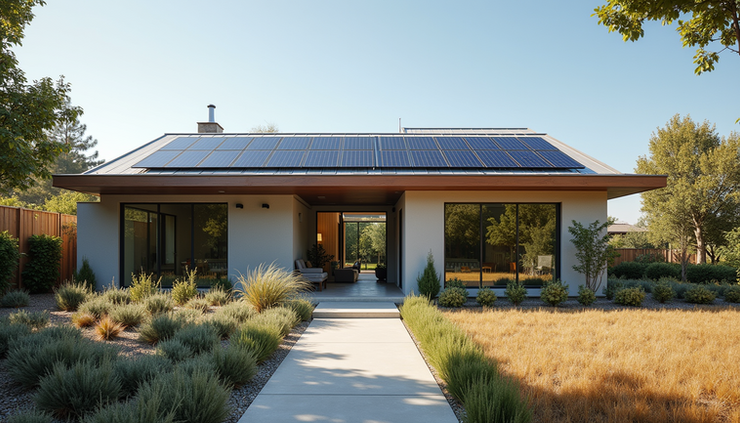
Solar panels and battery storage systems.
Low-flow plumbing fixtures and greywater recycling.
Use of reclaimed or locally sourced materials.
Passive solar design to reduce heating and cooling needs.
Green roofs or rain gardens to manage stormwater.
In Palo Alto, a small commercial building might feature a green roof that insulates the building and supports local pollinators, while capturing rainwater for irrigation.
Navigating Permitting Delays and Streamlining Approvals
Permitting delays frustrate many Bay Area builders and homeowners. Complex regulations and high demand for inspections slow down projects.
To reduce delays:
Engage with local planning departments early.
Submit complete and accurate permit applications.
Use pre-approved design templates where available.
Work with experienced local architects and contractors familiar with city processes.
San Francisco and San Jose have introduced online permitting portals and expedited review programs for ADUs and small projects, helping to speed approvals.
Addressing Housing Shortages with Thoughtful Design
The Bay Area’s housing shortage demands creative solutions that respect community character and environmental limits. Small-scale residential and mixed-use projects can add needed units without overwhelming infrastructure.
Examples include:
Duplexes and triplexes in single-family zones.
Converting underused commercial spaces into housing.
Building modular or prefabricated homes for faster construction.
Encouraging co-housing and shared living models.
In South Bay, a developer might build a cluster of small homes with shared green spaces, offering affordable options while maintaining neighborhood feel.



Comments